Reviewing This is How I Fight My Battles SVG for Real Embroidery
As a designer who spends half my life digitizing and the other half stitching, I have learned that not every digital file translates well to thread. We often see beautiful vectors online that look crisp on a screen but turn into a tangled mess under the needle. Recently, I came across This is How I Fight My Battles SVG, and instead of just downloading it for a quick mockup, I decided to put it through the paces of a real-world project evaluation. For embroidery designers, small business owners, and crafters, understanding how a graphic performs before you commit to expensive fabric is crucial.
First Impressions and Visual Personality
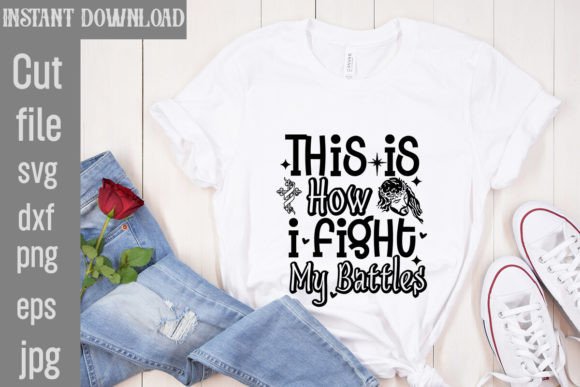
The phrase "This is How I Fight My Battles" carries a specific weight. It suggests resilience, quiet strength, and perhaps a touch of humor or defiance depending on the context. Visually, the design relies heavily on typography. When I first opened the files included in the DIGITAL DOWNLOAD ONLY package, I was looking at the structure of the letters. The download includes one .zip file with an SVG File for Cricut, a DXF File for Silhouette, an EPS File Vector, and a PNG File with a Transparent Background at 300 Dpi.
For an embroiderer, the SVG and EPS files are the starting point, but they are not the finish line. These are cut files and vector graphics, primarily intended for T-Shirt Designs and general Graphics. However, many of us use these as reference layers to create our own machine embroidery design files. The clean lines of the vector make it easy to trace and convert, but the spacing between letters is what caught my eye. In a printed T-shirt design, tight kerning looks sleek. In embroidery, tight kerning can lead to thread bunching and poor stitch definition.
From Screen to Stitch: A Real-World Scenario
To test the viability of this concept, I imagined a specific client request: a custom embroidered tote bag for a local nonprofit fundraiser. The theme was mental health awareness, and the slogan fit perfectly. I needed a design that was readable from a distance but durable enough for daily use. Using the This is How I Fight My Battles SVG as a visual guide, I assessed how it would translate to a 5x7 hoop size.
If you are using this strictly as a cut file for vinyl on a t-shirt, the process is straightforward. But for those of us turning this into a stitched piece, the challenge lies in the fill. A standard satin stitch might be too narrow for larger letters, causing them to look spindly, while a fill stitch could become too dense, making the fabric stiff. I found that breaking the phrase into two lines helped balance the visual weight. The mood it creates is empowering, which makes it ideal for personalized gifts like sweatshirt embroidery or even a sturdy apron for someone who works with their hands.
Navigating Fabric and Technique Challenges
One of the most critical aspects of using text-based designs is considering the fabric texture. If you plan to stitch this onto a textured towel or a fuzzy fleece blanket, the fine details of the font may get lost. I recommend using a running stitch outline to define the edges if you choose a fill stitch for the body of the letters. This adds clarity and prevents the design from blending into the background.
Dark fabrics present another hurdle. The PNG File included in the pack is great for digital previews, but when stitching on black or navy, you must ensure high contrast. Light thread colors on dark fabric require precise tension settings. I also noticed that some of the sharper corners in the vector graphics might need smoothing. In embroidery, sharp internal corners can cause thread breaks or puckering if the needle penetrates the same spot repeatedly. Rounding these slightly in your digitizing software can save you a lot of frustration during the stitch-out.
Commercial Viability and Product Value
For Etsy sellers and small shop owners, the appeal of This is How I Fight My Battles SVG lies in its relatability. It is not just a pretty picture; it is a statement. This increases the perceived value of the finished product. Customers are not just buying a tote bag; they are buying a piece of identity. However, professionalism is key. A sloppy stitch-out diminishes brand consistency. Before listing this as a commercial embroidery item, you must ensure the digitization is flawless.
Consider the end use. Is this for baby embroidery? If so, the thread must be soft, and the stabilizer must be tear-away to prevent irritation. Is it for a cap? Curved surfaces distort designs, so you may need to adjust the pull compensation. For holiday embroidery gifts, such as a pillow cover, the design should be centered and balanced to look good from all angles. The versatility of the phrase allows it to fit into various categories, from boutique branding to casual wear.
Practical Notes for the Designer
Before you rush to buy or use this asset, here are my practical recommendations based on years of trial and error:
- Test on Scrap Fabric: Never stitch a new design on your final garment. Use a similar weight and weave of scrap fabric to check for puckering.
- Check Thread Color Contrast: Use your machine’s preview function or a physical thread chart to ensure the text stands out against your chosen fabric.
- Review Stitch Density: If you are converting the SVG to an embroidery file yourself, keep the density moderate. High density leads to stiffness and potential fabric distortion.
- Confirm Hoop Size: Ensure the design fits comfortably within your hoop with enough margin for the frame to grip the fabric securely.
- Inspect Small Details: Look for tiny elements that might not stitch well. Simplify complex parts if necessary.
- Use Proper Stabilizer: For stretchy fabrics like t-shirts, use a cut-away stabilizer. For woven fabrics like tote bags, a tear-away is usually sufficient.
- Verify Licensing: Since this is a DIGITAL DOWNLOAD ONLY with vector and image files, confirm the license terms. Most SVGs are for personal use unless specified otherwise. If you plan to sell finished items, ensure you have the right commercial license or create your own unique digitization based on the inspiration.
Final Thoughts on Design Assets
In the world of handmade products, the gap between a digital graphic and a tactile embroidered patch is bridged by skill and attention to detail. This is How I Fight My Battles SVG offers a strong conceptual foundation. It is bold, meaningful, and visually striking. However, its success in your shop depends entirely on how you execute it. Whether you are creating a custom apparel line, designing printable mockups for your Etsy listings, or making a one-off gift, treat the vector as a blueprint, not the final product.
By respecting the limitations of thread and fabric, you can transform a simple graphics file into a high-quality, durable piece of art. Take the time to refine the stitch path, choose the right materials, and test thoroughly. Your customers will appreciate the quality, and your brand will benefit from the professionalism. Happy stitching.